How to remove hard water stains in Central Texas homes
Hard water stains are the chalky white spots and crusty rings left on glass, faucets and tile when mineral-rich water dries. Central Texas water tends to be hard, so most homes around Leander and Austin fight them every week. Here is how to remove them safely, surface by surface.
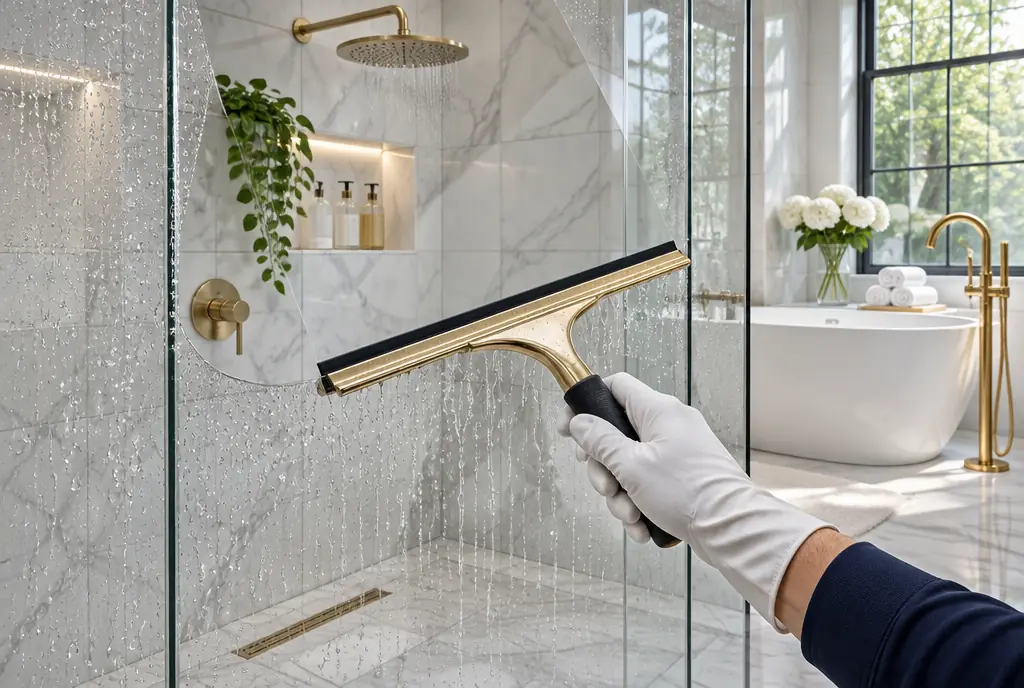
What causes hard water stains?
Hard water carries dissolved minerals, mostly calcium and magnesium. When a drop dries, the water leaves but the minerals stay. Over time, those thin layers stack into a visible crust. The U.S. Geological Survey explains how water hardness is measured and why it varies by region.
How to remove hard water stains from shower glass
First, spray the glass with plain white vinegar, or a mix of equal parts vinegar and warm water. Then let it sit for 10 to 15 minutes, so the acid has time to work. Next, scrub with a non-scratch pad, rinse and squeegee dry.
For thick build-up, repeat the process or use a cleaner made for limescale. Always test a small corner first. Also, never mix vinegar or acid cleaners with bleach, because the combination releases dangerous gas.
Faucets, shower heads and fixtures
Wrap a vinegar-soaked cloth around the faucet or shower head and leave it for 30 minutes. Alternatively, fill a plastic bag with vinegar and tie it around the shower head. Afterward, scrub the nozzles with an old toothbrush and rinse well. However, check your fixture’s finish first, because some coated or brass finishes need a gentler cleaner.
Toilets and tile
For a toilet ring, lower the water level, then apply a limescale cleaner or vinegar and let it soak. A pumice stone made for toilets removes stubborn rings without scratching porcelain when kept wet. On tile, scrub grout lines with a soft brush and rinse with clean water.
Surfaces where you should not use vinegar on hard water stains
Natural stone such as marble, travertine and limestone reacts with acid, so vinegar can etch and dull it. Granite sealers can also break down. On stone, use a pH-neutral stone cleaner and dry the surface instead. When in doubt, follow the manufacturer’s care guide.
How to stop hard water stains from coming back
- Squeegee shower glass after every shower
- Dry faucets with a microfiber cloth at night
- Run the bathroom fan to speed up drying
- Clean fixtures weekly so layers never build up
- Consider a water softener for the whole home
A deep cleaning removes months of build-up in one visit, and recurring cleaning keeps it from returning. You can see your price in about a minute with the instant quote.
Quick answers
Does vinegar remove hard water stains?
Yes, on most glass, tile and chrome. White vinegar is mildly acidic, so it loosens mineral deposits. Let it sit for several minutes before scrubbing, then rinse well. Do not use it on natural stone.
Why do hard water stains come back so fast in Texas?
Much of Central Texas has hard water, so every drop that dries leaves minerals behind. Squeegeeing glass and drying fixtures after use slows the build-up.
Can a cleaning service remove hard water stains?
Light and medium build-up usually comes off during a deep clean. Very old, etched glass may only improve, not fully clear, because etching is damage to the surface itself.
Get your exact price in 60 seconds
No phone tag. Pick your home size and service, see the price, and request your time.